
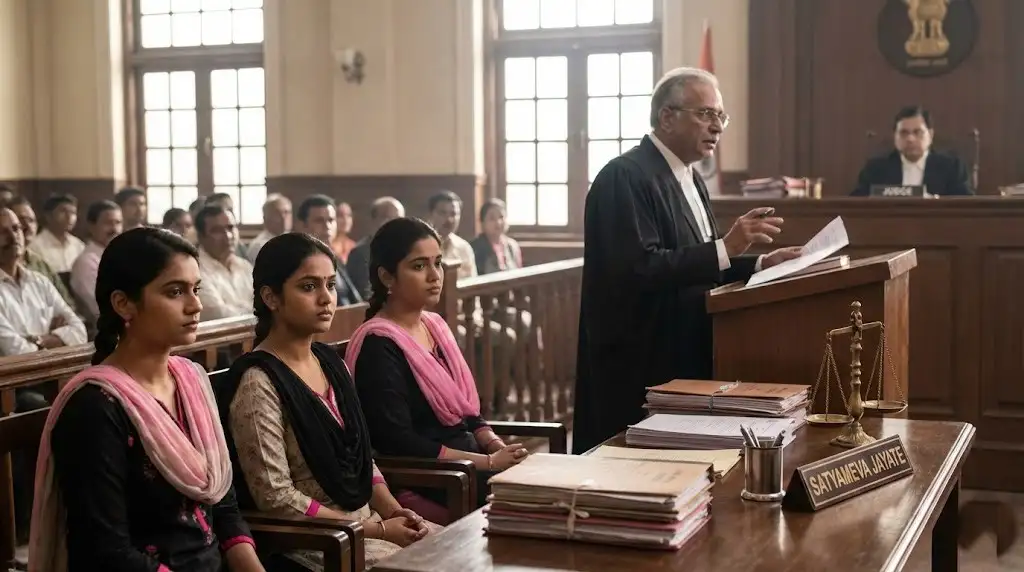
Bollywood has come a long way from the days of over-the-top action sequences and unrealistic courtroom dramas. Modern Indian cinema has embraced authenticity, with filmmakers consulting legal experts and researching actual provisions of the Indian Penal Code to craft compelling narratives. These realistic portrayals have inadvertently educated millions of viewers about their legal rights and the consequences of criminal actions. Let’s explore five groundbreaking films that brought serious criminal charges to the forefront of mainstream entertainment.
1. Drishyam (2015) – The Art of Legal Loopholes
Ajay Devgn’s masterful performance in Drishyam turned this thriller into a cultural phenomenon. The film revolves around a common man who uses his knowledge of cinema to protect his family from a murder investigation. What makes Drishyam particularly fascinating from a legal perspective is how it explores the thin line between murder and attempted murder.

The protagonist’s actions throughout the film raise questions about criminal intent, evidence tampering, and self-defense. The film brilliantly showcases the difference between murder and attempt to murder under Indian law. Understanding IPC Section 307 and attempt to murder provisions helps viewers appreciate the legal tightrope the characters walk throughout the narrative. These legal distinctions become crucial plot points that keep audiences guessing until the final frame.
Director Nishikant Kamat’s research into police procedures and legal investigations shows in every scene. The film demonstrates how evidence collection, witness testimony, and timeline reconstruction work in real criminal cases, making it both entertaining and educational.
2. Pink (2016) – Redefining Consent in Indian Cinema
Amitabh Bachchan’s “No means No” became more than just a dialogue—it became a social movement. Pink arrived at a crucial time in India’s conversation about women’s safety and consent laws. The courtroom drama centers around three young women falsely accused after defending themselves against sexual assault.

Pink brought Section 376 of the Indian Penal Code into mainstream conversation, educating millions about consent laws and women’s rights. The film’s detailed exploration of Section 376 IPC provisions was praised by legal professionals for its accuracy and sensitivity. Director Aniruddha Roy Chowdhury worked closely with lawyers to ensure every courtroom argument reflected actual legal practice.
The film challenged victim-blaming narratives and showed how character assassination is often used in sexual assault cases. Taapsee Pannu’s powerful performance, combined with Bachchan’s measured legal arguments, created a film that was both commercially successful and socially impactful. Pink proved that Bollywood could tackle serious legal issues without sacrificing entertainment value.
3. NH10 (2015) – Violence and Vigilante Justice
Anushka Sharma’s production debut NH10 is a brutal exploration of honor killings and mob violence in rural India. The film follows a couple’s road trip that turns into a nightmare when they witness a honor killing and become targets themselves. What starts as a thriller evolves into a commentary on caste violence, police inaction, and the failure of legal systems in certain parts of India.

NH10 doesn’t romanticize violence—it shows the raw, ugly reality of criminal intimidation and assault. The film depicts various forms of physical violence, criminal threats, and the psychological impact of being hunted by criminals. These scenarios represent real charges under Indian criminal law, from assault to criminal intimidation, showing how victims often face multiple layers of legal violations.
Director Navdeep Singh created an unflinching portrayal of how legal protection can break down in remote areas. The film sparked important conversations about police accountability and the need for faster legal intervention in cases involving violence against women.
4. Talvar (2015) – When the System Fails
Based on the controversial Aarushi Talwar murder case, Talvar (directed by Meghna Gulzar) offers a procedural examination of how criminal investigations can go wrong. The film presents multiple perspectives on the same crime, showing how bias, media pressure, and investigative incompetence can derail justice.

Irrfan Khan’s portrayal of an investigating officer demonstrates the meticulous work required in murder cases—from crime scene analysis to witness interrogation. The film explores concepts like evidence contamination, false confessions, and the presumption of innocence. Talvar is perhaps Bollywood’s most accurate depiction of how the Indian criminal justice system actually functions, with all its flaws and occasional successes.
The film raises uncomfortable questions: What happens when the police make mistakes? How does media trial affect actual legal proceedings? Can justice be served when the investigation itself is compromised? These questions resonated deeply with audiences who followed the real case.
5. Andhadhun (2018) – Moral Ambiguity and Criminal Intent
Sriram Raghavan’s black comedy thriller Andhadhun is a masterclass in storytelling that blurs the lines between victim and perpetrator. Ayushmann Khurrana plays a pianist pretending to be blind who witnesses a murder, triggering a chain of events involving multiple crimes, cover-ups, and moral compromises.

The film explores criminal conspiracy, murder, attempted murder, and evidence destruction—all while maintaining a darkly humorous tone. What makes Andhadhun legally fascinating is how it examines criminal intent. When does self-preservation become complicity? At what point does silence about a crime make you an accessory? These legal and ethical questions are woven seamlessly into an entertaining narrative.
The film’s ambiguous ending sparked heated debates about justice, karma, and whether the protagonist was hero or villain. This moral complexity reflects real-world criminal cases where motivations and culpability aren’t always black and white.
The Impact of Legal Realism in Cinema
These five films represent a new era in Bollywood where filmmakers take legal accuracy seriously. By consulting with lawyers, police officers, and legal scholars, directors create narratives that educate while they entertain. Viewers walk away with a better understanding of their rights, the legal system’s complexities, and the real consequences of criminal actions.
However, it’s crucial to remember that films are dramatized for entertainment. Real legal cases are far more complex, procedurally detailed, and time-consuming than any two-hour movie can portray. These films should inspire curiosity about legal rights and procedures, but they’re not substitutes for actual legal advice.
Conclusion: Cinema as Legal Educator
Bollywood’s evolution toward legal realism has created a unique form of public legal education. Films like Drishyam, Pink, and Talvar have sparked national conversations about criminal justice, women’s rights, and police procedures. They’ve made legal concepts accessible to audiences who might never read a law textbook or step into a courtroom.
As audiences become more sophisticated and demanding of authenticity, we can expect more filmmakers to invest in legal research and consultation. This trend benefits everyone—viewers get smarter entertainment, and society gains better awareness of legal rights and responsibilities.
The next time you watch a Bollywood thriller, pay attention to the legal details. You might be surprised at how much real law is woven into the entertainment. And who knows? That knowledge might prove useful someday.
What’s your favorite Bollywood legal thriller? Share your thoughts in the comments below!