
What is Gastroenteritis?
Gastroenteritis is a sickness that affects your stomach and intestines, making them feel sore and upset. It is sometimes called the “stomach flu” or just “gastro”. Even though it is called “stomach flu,” it is not the same as the flu that gives you a cough or a fever. Instead, gastroenteritis is caused by things like viruses, bacteria, or even parasites. These germs make your stomach and intestines inflamed, and when this happens, you might feel really sick.
I remember one time when I got gastroenteritis. It happened when I was on a trip with my family. I woke up in the morning feeling a little off, thinking I might have just eaten something that didn’t sit well. But soon, my stomach started to hurt, and I had to run to the bathroom because I felt like I was going to throw up. After that, I couldn’t stop going to the bathroom, and my stomach hurt a lot. It felt like my whole body was trying to get rid of something, and I didn’t know what it was at first. I felt weak and exhausted, and it was hard to enjoy the rest of the trip.
Gastroenteritis is something that happens to a lot of people at some point. It can happen when you eat food or drink water that has germs in it. Sometimes, these germs are viruses like norovirus or rotavirus, which are very good at spreading. Other times, it can be caused by bacteria like Salmonella, which are found in food that is not cooked well. Some parasites can also cause gastroenteritis, especially if you are in places where the water might be dirty.
When you have gastroenteritis, your body reacts by trying to get rid of the germs. Your stomach and intestines start to work in a way that causes vomiting, diarrhea, and stomach cramps. You might feel sick and uncomfortable, and it can make you feel very tired. Sometimes, you might even get a fever, which is your body’s way of fighting off the infection.
The main signs of gastroenteritis are vomiting, diarrhea, and stomach cramps. The vomiting can happen quickly, making you feel like you just can’t hold anything down. Diarrhea comes with the feeling that you need to go to the bathroom urgently. The stomach cramps can hurt a lot and make you feel like you don’t want to move. These symptoms can last for a day or two, or sometimes even a week, depending on what caused it. While the illness can make you feel really bad, the good news is that it usually goes away by itself, and your body heals after a little rest.
I remember feeling so tired and weak after being sick for a day. I couldn’t do anything, and all I wanted to do was lie down. But drinking lots of water and clear liquids, like soup or a special drink called an oral rehydration solution, helped me feel better. This is really important when you have gastroenteritis, because your body loses a lot of water when you throw up or have diarrhea. Replacing that water helps your body get back to normal faster.
Even though gastroenteritis usually goes away on its own, it can be more dangerous for certain people, like little kids, older adults, or people who are sick with other problems. These people can get very dehydrated because their bodies don’t have enough water, and that can make them feel worse. If you ever feel like the symptoms are lasting too long or getting worse, it’s a good idea to go see a doctor, just to make sure everything is okay.
Causes of Gastroenteritis
Gastroenteritis is an inflammation of the stomach and intestines that can be caused by a variety of factors. It’s most commonly triggered by viruses, bacteria, or parasites, but other causes such as chemicals and medications can also contribute. Let’s break it down and explore these causes in more detail.
Viral Causes of Gastroenteritis
The most common cause of gastroenteritis is viral infection. These viruses are highly contagious and can spread easily from person to person. The four main viruses responsible for most gastroenteritis cases include:
- Norovirus
- Rotavirus
- Adenovirus
- Astrovirus
I remember a time when I traveled with a group of friends for a weekend trip. One of us had a slight stomach upset, thinking it was just an off meal. By the time we reached our destination, nearly half the group was suffering from severe stomach cramps, vomiting, and diarrhea. It turned out to be norovirus, a very common culprit. We realized how easily it spread between people in close contact.
Norovirus, often known as the “stomach flu,” can spread through contaminated food, water, or surfaces. It’s highly contagious, and just touching something like a doorknob or eating from an infected plate can put you at risk. Rotavirus, especially in young children, is another leading cause. It can be caught from contaminated water or food, and because children’s immune systems are still developing, they tend to be more vulnerable.
Bacterial Causes of Gastroenteritis
Bacterial infections are also a common cause of gastroenteritis. In fact, foodborne infections are one of the biggest reasons behind bacterial gastroenteritis. The following bacteria are known for causing stomach infections:
- Salmonella
- E. coli
- Campylobacter
I’ll never forget the time I tried a new food stand at a fair. The vendor was serving grilled chicken that looked delicious. But a few hours later, I began experiencing stomach cramps and diarrhea. After a visit to the doctor, I was diagnosed with an E. coli infection, which often results from improperly cooked or contaminated food. E. coli is a bacterium that can be found in undercooked meat, especially ground beef. It can also be present in contaminated water or vegetables.
Salmonella is another well-known bacterial cause. It’s often linked to poultry, eggs, and other undercooked meats. While you might think that the risk is only associated with rare meats, Campylobacter, another bacterial culprit, is commonly found in contaminated water or undercooked chicken. Cooking meat to the right temperature and maintaining food safety are key to preventing these infections.
Parasitic and Other Causes
Sometimes, gastroenteritis isn’t caused by viruses or bacteria but by parasites or other external factors. Here’s a closer look at some of the parasites that can cause gastroenteritis:
- Giardia
- Entamoeba histolytica
I recall my first trip to a tropical region where I got sick after drinking untreated water from a local stream. It was later confirmed that I had contracted Giardia, a microscopic parasite that thrives in contaminated water. Giardia causes severe diarrhea, cramps, and nausea, and it can be transmitted through water, food, or contact with contaminated surfaces.
Another parasitic infection, Entamoeba histolytica, is typically found in areas with poor sanitation. It causes amoebic dysentery, which can lead to more severe symptoms like bloody diarrhea and weight loss.
Apart from parasites, chemicals or medications can also trigger gastroenteritis. For instance, some medications, particularly those used for cancer treatments, can irritate the digestive tract and cause symptoms similar to gastroenteritis. In other cases, exposure to chemicals or toxins—like those from food preservatives or pesticides—can lead to inflammation of the stomach and intestines.
Symptoms of Gastroenteritis
Gastroenteritis, often called the “stomach flu,” is a condition that affects your stomach and intestines. When you catch it, you might experience a mix of unpleasant symptoms that can make you feel pretty miserable. It’s important to know what these symptoms are and how to spot when things are getting worse.
Common Symptoms of Gastroenteritis
When I first got gastroenteritis, it hit me suddenly. One minute I felt fine, and the next, my stomach was churning. I immediately started feeling nauseous, and within a few hours, I was dealing with a whirlwind of symptoms. If you’ve ever had a bad stomach bug, you’ll likely recognize some of these common signs:
- Vomiting: This is one of the first signs for many people. It’s your body’s way of getting rid of harmful invaders, like viruses or bacteria. In my case, the nausea quickly turned into vomiting, and I could hardly keep anything down for hours.
- Diarrhea: Along with vomiting, diarrhea is another hallmark of gastroenteritis. Your intestines become irritated, leading to frequent trips to the bathroom. It’s not just uncomfortable; it can also leave you feeling drained and weak.
- Abdominal Cramps: These cramps happen because your intestines are inflamed. I remember clutching my stomach in pain, as though my insides were twisted into knots. It’s a sharp, uncomfortable feeling that comes and goes.
- Fever: While not always present, fever is common. Your body tries to fight off the infection by raising its temperature. I had chills at one point, which made the whole experience feel even worse.
- Dehydration: This is something that can sneak up on you. With all the vomiting and diarrhea, you lose a lot of fluids and electrolytes. During my battle with gastroenteritis, I found myself feeling incredibly thirsty but unable to drink enough to stay hydrated.
Severe Symptoms
While the symptoms mentioned above are uncomfortable, they’re usually not a cause for alarm. However, there are signs that indicate your gastroenteritis might be more serious and you should seek medical attention as soon as possible. I once made the mistake of ignoring some of these severe symptoms, and it ended up making the situation much worse.
Here’s what you should watch out for:
- Prolonged Vomiting: If the vomiting doesn’t stop or if you can’t keep anything down for more than 24 hours, it’s time to call a doctor. When I couldn’t even sip water without vomiting, I knew something was wrong. Prolonged vomiting can lead to severe dehydration, which requires medical intervention.
- High Fever: A fever above 102°F (38.9°C) may indicate that the infection is more serious. It’s one of the signs that your body’s immune system is working overtime. In my case, when the fever hit 101°F (38.3°C), I started to feel dizzy and weak. This kind of fever could signal that the illness isn’t just a common viral infection but could be bacterial.
- Blood in Stool: If you notice blood in your stool or if your diarrhea turns a dark, tarry color, it could be a sign of a bacterial infection or another complication. This was something I was warned about when I went to the doctor, and luckily, I didn’t experience it, but it’s important to be aware of. Blood in stool is a red flag that shouldn’t be ignored.
- Severe Abdominal Pain: If your stomach cramps turn from mild discomfort to intense, constant pain, it might indicate something more serious like a bowel obstruction or severe infection. I remember how the cramps gradually turned worse, but they were manageable. If they had become unbearable, I would have needed immediate care.
Duration of Symptoms
When it comes to how long gastroenteritis lasts, the timeline can vary from person to person. In most cases, the symptoms tend to be short-lived, but they can feel like an eternity when you’re going through them.
- Typical Duration: Most people begin feeling better within 1 to 3 days, especially if it’s a mild viral infection. The vomiting and diarrhea usually subside within a day or two, and as your body rehydrates, you start to regain some strength. I remember after the second day, I was able to drink small amounts of water and rest in bed without feeling totally miserable.
- Prolonged Symptoms: In some cases, symptoms can last up to 10 days. This is especially true if you have a bacterial or parasitic infection. When I had a viral form of gastroenteritis, the worst was over after 3 days, but a friend of mine who had a bacterial infection had symptoms for a full week. They ended up needing antibiotics to recover.
- Factors Affecting Duration: Your general health plays a big role in how long the symptoms last. If you’re younger or older, or if you have a weakened immune system, the symptoms might last a little longer. For me, I’m pretty healthy, so I bounced back quickly, but people with compromised immune systems may find that it takes longer to recover.
Diagnosing Gastroenteritis
When you have stomach problems like vomiting, diarrhea, or belly pain, it might be gastroenteritis. Doctors use different tests and checks to figure out if it’s gastroenteritis and what caused it. Let’s look at how doctors diagnose this illness and how they tell it apart from other similar problems.
Medical Tests
To understand what’s wrong, doctors first ask about your symptoms. You may feel sick with a stomach ache, vomiting, or diarrhea. If this happens, doctors usually do a few tests to see what caused your sickness.
Stool Tests
One of the most common tests doctors use is a stool test. You might have to give a sample of your stool (poop) for the doctor to check. The doctor looks for germs like viruses, bacteria, or parasites that might be causing the problem. For example, viruses like norovirus or rotavirus are often found in stool samples when people have gastroenteritis. Sometimes bacteria like Salmonella or E. coli can also cause stomach problems, and the stool test helps the doctor find out if these are the cause.
Blood Tests
Doctors may also take a small sample of your blood. Blood tests can help doctors check for signs of infection. They might see if there are more white blood cells, which can happen when your body is fighting an infection. Blood tests can also help the doctor see if you’re getting dehydrated, which is common with gastroenteritis.
Physical Exam
The doctor will also feel your belly to check for any pain or swelling. They may press gently on different parts of your stomach to see where it hurts. This helps them understand if it’s gastroenteritis or something else. When I had gastroenteritis once, my doctor pressed on my stomach to check if the pain was all over or in one specific area. This helped them figure out if something more serious was going on, like an appendix problem, or if it was just a stomach infection.
Differential Diagnosis
Sometimes, gastroenteritis feels a lot like other stomach problems. Doctors need to be careful to make sure they know what’s really happening. There are other illnesses that can make your belly hurt, make you throw up, or give you diarrhea. Here’s how doctors tell gastroenteritis apart from other problems:
Food Poisoning vs. Gastroenteritis
Gastroenteritis and food poisoning can seem the same because they both make you feel sick. You might throw up, have diarrhea, or get a stomach ache. But food poisoning usually starts quickly after eating bad food, while gastroenteritis can come on slowly. Food poisoning is more about the food you ate, and gastroenteritis could be from a virus or bacteria in your body. If you feel sick right after eating, it might be food poisoning, but if it’s not right after, it’s probably gastroenteritis.
Irritable Bowel Syndrome (IBS)
IBS is another condition that can cause belly pain, bloating, and changes in how often you go to the bathroom. The difference is that IBS is something you deal with over time, not just once in a while. It’s not caused by an infection like gastroenteritis. The doctor can tell the difference because IBS lasts for months or even years, while gastroenteritis usually goes away after a few days.
Inflammatory Bowel Disease (IBD)
IBD includes diseases like Crohn’s disease and ulcerative colitis, which can make your stomach hurt, too. These diseases are different from gastroenteritis because they last a long time. Doctors look for signs that the digestive system has inflammation, and they might ask for tests like a colonoscopy or special scans to check the inside of your gut. If the doctor suspects IBD, they’ll order these extra tests.
Lactose Intolerance or Food Sensitivities
Sometimes, people have problems with certain foods. If you eat something like dairy and your stomach hurts or you get diarrhea, it might be because of lactose intolerance. It’s different from gastroenteritis because it’s not caused by germs. If it happens right after eating a certain food, it’s more likely to be a food sensitivity.
Appendicitis
Appendicitis happens when your appendix gets infected, and it can feel a lot like gastroenteritis because you might have a stomach ache or feel sick. But the pain from appendicitis is usually in one spot on your lower right side, while gastroenteritis makes your whole stomach hurt. Doctors use your symptoms and a physical exam to figure out which one it is. I had a friend who thought they had gastroenteritis, but it turned out they had appendicitis. The doctor did a few tests, and they knew right away it wasn’t gastroenteritis. It was an emergency, and they needed surgery.
Doctors use these tests to make sure they know what’s going on. If your symptoms last for a long time, or if the doctor thinks it’s not just gastroenteritis, they’ll run more tests to figure it out. It’s always important to check with a doctor to make sure you get the right care, especially if you feel very sick or if you can’t stop throwing up or having diarrhea.
Doctors look at everything carefully—your symptoms, test results, and physical exam—to make sure you get the right treatment and feel better soon.
Treatment of Gastroenteritis
When you or someone you care about has gastroenteritis, it’s important to know how to treat it. Gastroenteritis is an illness that affects your stomach and intestines. It can cause vomiting, diarrhea, and stomach pain. Here are some ways to treat and manage gastroenteritis to feel better quickly.
Home Care and Self-Management
Hydration
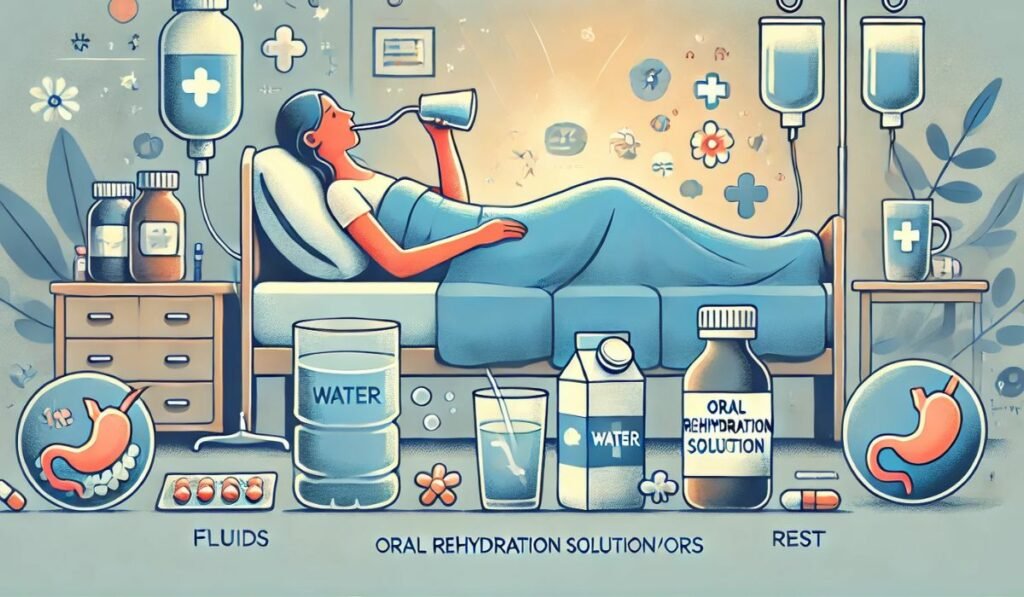
One of the most important things to do when you have gastroenteritis is to stay hydrated. Vomiting and diarrhea can make your body lose a lot of water. If you don’t drink enough fluids, you can get dehydrated. Dehydration can make you feel worse and can even be dangerous. Drinking enough fluids helps your body feel better and can help you recover faster.
The best way to stay hydrated is to drink oral rehydration solutions (ORS). These are special drinks that you can buy at the pharmacy. They help replace the water and salts that your body loses during diarrhea and vomiting. You can also drink clear fluids, like water, clear broth, or drinks such as sports drinks (without caffeine). It’s important to avoid sugary drinks like soda because they can make diarrhea worse.
Rest and Light Foods
When you’re feeling sick with gastroenteritis, rest is very important. Your body needs energy to fight off the infection and get better. It’s a good idea to stay in bed and take naps. Eating light foods can also help your stomach feel better. Once your symptoms start to go away, you can try eating simple foods like crackers, rice, or toast. These foods are easy on your stomach and won’t upset it. Bananas and applesauce are also good foods to eat when your stomach is still sensitive. Avoid heavy foods, like greasy or spicy meals, until you feel completely better.
Medications
Anti-Nausea Medications
If you feel like vomiting and can’t keep anything down, anti-nausea medicines can help. These medicines, like ondansetron (Zofran), can stop vomiting and help you feel better. But you should only take these medicines if your doctor says it’s okay. They are not for everyone, and sometimes it’s better to let your body throw up the bad stuff.
Antidiarrheals
If you have diarrhea, you might think that taking medicine to stop it would be helpful. There are medicines called antidiarrheals, like loperamide (Imodium), that slow down diarrhea. However, these medicines aren’t always the best choice. If your diarrhea is caused by a bacteria, it’s better to let your body get rid of the bacteria. Your doctor will tell you if it’s okay to take antidiarrheals.
Probiotics
Probiotics are tiny living things that are good for your digestive system. They help bring back healthy bacteria to your stomach and intestines. Sometimes, taking probiotics can help you feel better faster. Probiotics are found in foods like yogurt and can also be bought in the form of pills or powders. Taking probiotics can help reduce the amount of diarrhea and make your stomach feel better.
When to See a Doctor
Most people with gastroenteritis get better in a few days, but sometimes the symptoms can be very serious. If any of these things happen, it’s important to see a doctor:
- Severe Dehydration: If you feel very thirsty, dizzy, or your mouth is dry, you might be dehydrated. If your pee is very dark or you can’t urinate, that’s another sign of dehydration. You need to drink fluids or see a doctor right away. Dehydration is more serious for babies, older people, and people with other health problems.
- Blood in Stools or Vomit: If you notice blood in your stool (poop) or in your vomit, that’s a sign you need to see a doctor immediately. This could mean you have a serious infection that needs special treatment.
- Persistent Symptoms: If your vomiting, diarrhea, or stomach pain lasts for more than a couple of days, or if it gets worse, you should see a doctor. Sometimes, the infection can last longer or need more treatment.
Hospital Treatment
In some cases, gastroenteritis can be very serious, and you may need to go to the hospital for special treatment. If dehydration is very severe, doctors will give you fluids through an IV (intravenous). This is a way to get fluids into your body quickly when you can’t drink enough. Along with fluids, the doctor may give you electrolytes like sodium and potassium to help your body work properly.
If your gastroenteritis is caused by a bacterial infection, the doctor might give you antibiotics. Antibiotics are special medicines that kill bacteria. However, antibiotics don’t work for viral infections, so they are only used if the cause of your gastroenteritis is a bacteria, not a virus. Your doctor will know if you need antibiotics based on the type of infection you have.
Preventing Gastroenteritis
Gastroenteritis is a sickness that can make you feel very sick with stomach cramps, vomiting, and diarrhea. The good news is that it can be prevented! By following a few simple steps like washing your hands, getting certain vaccines, and being careful when you travel, you can avoid getting gastroenteritis. Let’s look at how to keep yourself safe from this illness.
Hygiene Practices
One of the best ways to stop germs from spreading and causing gastroenteritis is by practicing good hygiene. Germs that cause gastroenteritis can spread easily from dirty hands, food, or water. To help keep germs away, follow these tips:
- Wash Your Hands: Always wash your hands with soap and water, especially before eating and after using the bathroom. Scrub your hands for at least 20 seconds. If you can’t find soap and water, use hand sanitizer. Handwashing is one of the most important ways to keep yourself safe from germs.
- Clean Surfaces: Clean and disinfect things that many people touch, like doorknobs, light switches, and remote controls. Germs can stay on these surfaces and spread to your hands when you touch them. Cleaning these areas often will help stop germs from spreading.
- Avoid Dirty Food and Water: Be careful with the food and water you drink. Always eat food that is cooked well. Avoid raw vegetables or fruits unless you can peel them yourself. When you’re traveling, be careful with the water you drink. If you’re not sure if it’s safe, choose bottled water or boil it before drinking. This helps stop germs from getting into your stomach and causing sickness.
Vaccines
Getting vaccines is another way to prevent gastroenteritis. Vaccines help your body fight off infections before they can make you sick. There is a special vaccine to help protect children from one of the main causes of gastroenteritis.
- Rotavirus Vaccine: Rotavirus is a germ that causes a lot of stomach problems in children. It can make them very sick with vomiting and diarrhea. The rotavirus vaccine helps prevent this. It’s usually given to babies in two or three doses starting at two months old. The vaccine helps protect children from getting sick and from needing to go to the hospital. If you have a baby, talk to your doctor about getting this important vaccine.
Safe Travel Tips
When you travel, especially to places with different hygiene standards, you need to be extra careful about the food and water you eat and drink. Travel can be a lot of fun, but you need to follow some tips to make sure you stay healthy and don’t get sick with gastroenteritis.
- Be Careful with Food: It’s important to make sure the food you eat is cooked well. Don’t eat food that is raw or uncooked unless you can peel it yourself, like fruits. Be careful with street food because it may not be prepared in the cleanest conditions. If you’re not sure if the food is safe, it’s better to avoid it. When you eat at a restaurant, make sure the food is hot and freshly cooked.
- Drink Safe Water: In many places around the world, the tap water may not be clean. It can have germs that make you sick. Always choose bottled water that is sealed. If you have to drink water from the tap, make sure to boil it first to kill any germs. Don’t drink ice from drinks, because it might have been made from dirty water.
- Keep Your Hands Clean: When you travel, you may not always have soap and water available. Carry hand sanitizer with you so you can clean your hands before eating or touching your face. You can also use wipes to clean places you might touch, like airplane trays or bus seats.
- Get Vaccinated Before You Travel: If you are going to a place with higher risks of gastroenteritis, talk to your doctor. You may need vaccines to help protect you from stomach sickness. Vaccines can keep you safe from illnesses like rotavirus, cholera, and hepatitis A.
By following these simple tips, you can protect yourself from gastroenteritis while traveling. It’s important to be careful with food and water, keep your hands clean, and make sure you have the right vaccines before you go.
Complications of Gastroenteritis
Gastroenteritis can cause several problems in the body. If not treated properly, these problems can make the illness worse. Let’s look at some of the most common complications, including dehydration, the impact on children, older adults, and people with weaker immune systems, as well as long-term effects like irritable bowel syndrome (IBS) and chronic fatigue.
Dehydration: How Gastroenteritis Can Lead to Dehydration
One of the biggest concerns when you have gastroenteritis is dehydration. This happens because your body loses too much water and important salts through vomiting and diarrhea. Dehydration can be dangerous if it’s not treated quickly.
When you’re dehydrated, you might feel very thirsty. Your mouth and throat might feel dry. You may also notice that you are not peeing as much as usual. Your pee may look darker than normal. If you feel very tired, dizzy, or weak, these could be signs that you’re dehydrated. In some cases, your eyes or cheeks may look sunken.
It’s really important to drink fluids to avoid dehydration. Water, clear liquids, or special drinks called oral rehydration solutions (ORS) can help replace the lost fluids and salts. If dehydration gets very serious, you may need to go to the hospital to get fluids through an IV.
Impact on Vulnerable Populations: Increased Risks for Children, Elderly, and Immunocompromised Individuals
Some people are more at risk of having serious problems from gastroenteritis. These groups include children, elderly adults, and people with weaker immune systems.
- Children: Children, especially babies and toddlers, are more likely to get dehydrated from gastroenteritis. They have smaller bodies, so they lose fluids faster than adults. Also, children might not always tell you when they’re feeling unwell, making it harder to notice dehydration early. If a child is very thirsty, crying without tears, or not making as much pee, these could be signs of dehydration. You might also notice that their cheeks or eyes look sunken.
When babies and young children are sick with gastroenteritis, it’s important to give them small amounts of fluids often to help keep them hydrated.
- Older Adults: Older adults are also at higher risk. They may not feel thirsty even when they’re dehydrated, and they may have other health problems that make it harder for their body to fight off the infection. Older adults might also be more likely to get very weak or confused if they become dehydrated.
If an older person is feeling dizzy, tired, or confused, or if they can’t get up without help, these could be signs that they are dehydrated and need medical attention.
- People with Weakened Immune Systems: People with weakened immune systems, such as those who have cancer or HIV/AIDS, are at a higher risk of severe infections. When these people get gastroenteritis, the infection can last longer or cause worse symptoms. If someone’s immune system is weak, they might need extra care to fight off the infection and prevent complications like dehydration.
Long-Term Effects of Gastroenteritis
In most cases, gastroenteritis goes away after a few days. However, sometimes the illness can cause long-lasting problems. These problems might continue for weeks or even months after the infection is gone.
- Post-Infectious Irritable Bowel Syndrome (IBS): After you recover from gastroenteritis, some people develop a condition called irritable bowel syndrome or IBS. IBS is a problem that affects the large intestine, causing stomach pain, bloating, diarrhea, or constipation. This happens because the infection can damage the digestive system. The symptoms of IBS can last for a long time, sometimes even months after the infection has cleared up.
- Chronic Fatigue: Some people feel very tired for weeks or months after having gastroenteritis. This is called chronic fatigue. Even though they might have recovered from the stomach illness, they still feel weak and don’t have much energy. This can make everyday tasks, like going to work or school, much harder. If the fatigue doesn’t go away, it’s important to talk to a doctor to make sure there isn’t another underlying issue.
- Malabsorption: In rare cases, gastroenteritis can cause malabsorption. This means the body has trouble absorbing the nutrients from food. The stomach and intestines are damaged by the infection, and this makes it harder to get the vitamins and minerals the body needs. Symptoms of malabsorption can include losing weight without trying, feeling bloated after eating, or seeing undigested food in your stool. If these problems last for a long time, a doctor can test for malabsorption and recommend treatment.
Gastroenteritis and Travel
Risks While Traveling
Gastroenteritis is a common sickness that can happen when you travel. It makes your stomach hurt, and it can cause diarrhea, vomiting, and cramps. People often get this sickness when they travel to places with different water and food. This is especially true in countries where the water and food might not be clean or safe.
When you go to a new place, you might drink water or eat food that has germs in it. These germs can make you sick. In some countries, the water is not safe to drink, and it can have germs like bacteria or viruses. Food that is not cooked properly, like undercooked meat or fish, can also carry germs. Even fruits and vegetables that are not washed well can cause sickness.
The sickness caused by germs in food and water is called traveler’s diarrhea. The germs that cause this illness include E. coli, Salmonella, and Campylobacter. Even though this illness is usually not serious for healthy adults, it can be more dangerous for children, older people, or anyone who has a weak immune system. These people can get very sick, so it’s important to be careful.
Tips to Avoid Gastroenteritis While Traveling
Even though you might get sick while traveling, you can take simple steps to stay safe and avoid getting gastroenteritis. Here are some easy tips to help you:
1. Be Careful with Water: Water is one of the biggest things you need to be careful with when traveling. In some countries, the tap water is not safe to drink. Even brushing your teeth with dirty water can make you sick. It’s better to drink bottled water, but make sure the bottle is sealed. If you can’t find bottled water, you can use special water purification tablets to make the water safe. This will help stop you from getting sick from bad water.
2. Choose Safe Food: When you travel, street food can seem like a fun treat, but it might not be safe to eat. You should only eat food that is cooked all the way through and served hot. Avoid eating food that is raw or not cooked enough, like raw meat or fish. Raw foods can carry germs that can make you sick. Fruits and vegetables are also a risk if they have not been washed with clean water. If you can, pick fruits that you can peel yourself.
3. Wash Your Hands Often: One of the best ways to avoid germs is to wash your hands. Wash your hands after you use the bathroom, before you eat, and after touching anything that might be dirty. If you can’t find soap and water, use hand sanitizer. It’s a good idea to carry hand sanitizer with you when you travel. Keeping your hands clean helps you avoid putting bad germs in your mouth.
4. Avoid Ice in Drinks: Ice can also be a problem when you travel. In some places, the ice is made from tap water that can be dirty. If you drink a drink with bad ice, you could get sick. It’s safer to drink drinks that don’t have ice in them. If you really want ice, ask for drinks without ice, or only drink from places that you trust to make the ice from clean water.
5. Be Careful with Dairy Products: Dairy products like milk, cheese, and yogurt can also carry germs if they are not made the right way. In some places, dairy products are not pasteurized, which means they might not be safe to eat. If you are traveling to a place where the dairy may not be pasteurized, it’s safer to skip the milk and cheese unless you know it has been treated to be safe.
6. Pack Helpful Travel Supplies: Even if you take all these precautions, you might still get sick. That’s why it’s a good idea to pack a few things to help you feel better if you do get sick. You can bring oral rehydration salts (ORS), which help replace fluids and nutrients your body loses if you have diarrhea or vomiting. Electrolyte drinks are also good for keeping your body healthy. Some medications can help stop nausea or diarrhea, but only use them if your doctor says it’s okay. Bringing some probiotics can also be helpful because they help keep your stomach healthy when you are traveling.
These steps will help protect you from getting gastroenteritis while traveling. By being careful about what you eat and drink, washing your hands often, and carrying the right supplies, you can keep yourself safe and healthy during your trip.
FAQs
How long does gastroenteritis last?
Gastroenteritis usually lasts for a few days. Most people feel better after 1 to 3 days. Some people may feel sick for up to 10 days, but this is less common. The symptoms like vomiting and diarrhea often get better after 24 to 48 hours. If you or someone you care about has been sick for more than a few days, it’s a good idea to see a doctor. Some people, especially young children, older adults, or people with weak immune systems, may feel worse or stay sick longer, so it’s important to keep an eye on them and get medical help if needed.
What’s the best way to treat gastroenteritis at home?
The best way to treat gastroenteritis at home is by drinking lots of fluids to stay hydrated. When you have gastroenteritis, you lose a lot of water from vomiting and diarrhea, so it’s important to drink things like water, clear soups, or oral rehydration solutions to help replace what your body loses. You can also eat simple foods like bananas, rice, and toast that are easy on your stomach. It’s important to rest and give your body time to heal. Stay away from heavy or greasy foods because they can make your stomach feel worse. If you feel very sick or if the symptoms last too long, make sure to see a doctor.
Can gastroenteritis be contagious?
Yes, gastroenteritis can spread from person to person. It is very contagious. The germs that cause gastroenteritis can spread through contact with infected stool, vomit, or food and water that have been touched by someone who is sick. To stop the germs from spreading, wash your hands often. Always wash your hands after using the bathroom and before eating or preparing food. If you are sick with gastroenteritis, it’s a good idea to stay home until you feel better and have been symptom-free for at least 24 hours. This helps stop the illness from spreading to others.
Can you take antibiotics for gastroenteritis?
Antibiotics are not always needed for gastroenteritis. Most of the time, gastroenteritis is caused by a virus, and antibiotics do not work on viruses. When gastroenteritis is caused by a virus, your body will usually heal on its own in a few days with rest and fluids. However, if gastroenteritis is caused by bacteria, antibiotics may be needed. But not all bacterial infections require antibiotics. It’s important to see a doctor to find out what kind of germs are causing the illness and whether antibiotics are necessary.
How can I prevent gastroenteritis from spreading to others?
To keep gastroenteritis from spreading to other people, you should wash your hands often, especially after using the bathroom and before eating. If you are sick, avoid close contact with others, and try to stay home until you have been symptom-free for at least 24 hours. Clean surfaces that might have germs on them, like bathroom counters, toilets, and kitchen counters, using a disinfectant. If you are in a place where germs can spread easily, like at a daycare or school, make sure to wash your hands well and take care with food and water to avoid getting sick. Following these simple steps can help stop the germs from spreading and keep others safe.
Conclusion
Gastroenteritis is a sickness that makes your stomach hurt. It can cause vomiting and diarrhea. It is caused by germs like viruses, bacteria, or parasites. Even though it can make you feel sick, it is usually not dangerous if you take care of yourself. To feel better, drink lots of fluids like water and soups. Get plenty of rest and eat simple foods like toast and bananas. Wash your hands often, especially after using the bathroom or before eating. This helps stop the germs from spreading. If your symptoms last too long or you feel worse, see a doctor. Be careful with food and water, especially when traveling. Follow good hygiene to stay safe from gastroenteritis.